Statistical Models in Climate Science and Their Surprising Casino Applications
At first glance, predicting next century’s global temperatures and calculating the odds of drawing a royal flush seem worlds apart. Yet, beneath the surface, climate scientists and gambling analysts speak a remarkably similar language: the rigorous dialect of probability and statistics. Both fields grapple with deeply uncertain systems – be it the chaotic atmosphere or the randomised deck of cards—and employ an identical toolkit of mathematical models to find signal in the noise. This exploration reveals how the very techniques shaping UK and Canadian climate policy are also decoding the mathematics of casino games, proving the universal power of statistical thinking.
The Shared Language of Probability
The cornerstone of both climate science and gambling analysis is probability theory. It provides the framework for quantifying uncertainty, whether forecasting a 40% chance of rain in London or the 2.4% probability of being dealt a pair of aces in Texas Hold’em. This shared foundation allows researchers to move from deterministic guesses to probabilistic statements, expressing confidence levels and risk. The pioneering work of British statisticians like Sir David Cox, particularly his development of the Cox proportional hazards model, exemplifies this. Originally designed to analyse survival data in medicine, this model’s logic for handling time-to-event data finds echoes in assessing the ‘survival’ time of a losing streak or the time between extreme weather events.
Modelling Uncertainty in Complex Systems
Neither the global climate nor a craps table is a simple, predictable machine. Both are complex systems influenced by a multitude of interconnected variables. Climate models must account for greenhouse gas concentrations, ocean currents, solar radiation, and aerosols. Similarly, a statistical model for blackjack must consider deck composition, dealer rules, and player decisions. Probability theory provides the structure to build these models, allowing for the incorporation of random elements and the calculation of likely outcomes across vast possibility spaces.
From Weather Forecasts to Betting Odds
The UK Met Office’s daily weather forecasts are a prime example of probability in public-facing science. A statement like “60% chance of precipitation” is a calibrated probabilistic output from immense numerical models. In a direct parallel, bookmakers set odds on sports events using statistical models that account for team form, player injuries, and historical performance. Both convert a model’s assessment into a public-facing probability, though for vastly different ends. Key institutions like the University of Oxford’s Department of Statistics are central to advancing the underlying theory that makes such precise probabilistic communication possible.
Markov Chains: From Weather Sequences to Game States
Markov chains are powerful statistical models used to describe systems that transition between different states, where the next state depends only on the current one, not the full history. This ‘memoryless’ property makes them surprisingly versatile for modelling seemingly complex sequences.
Predicting UK Weather Patterns
The UK Met Office utilises concepts akin to Markov chains in aspects of weather and seasonal forecasting. For instance, modelling whether a day will be dry, rainy, or snowy can be treated as a state transition problem. While real weather has some memory, simplified Markov models help in understanding persistence and change in weather patterns over short sequences, contributing to the broader ensemble of tools used for projections.
The Memoryless Nature of Card Games
This memoryless property is perfectly embodied in casino card games like blackjack. Once the cards are shuffled, the probability of the next card being an ace depends only on which cards have already been dealt from that specific deck, not on the outcomes of previous hands. This is why basic blackjack strategy is based on the current composition of the deck (or shoe), making it a practical application of a Markovian process. Each new hand is a state transition, dependent on the present state of the deck.
Monte Carlo Simulations: A Universal Tool
When systems are too complex for analytical solutions, scientists turn to Monte Carlo simulations. This method relies on running thousands or millions of random samples to approximate probabilities and understand the range of possible outcomes. It is arguably the most direct link between climate research and casino analysis.
Climate Scenario Modelling at the Hadley Centre
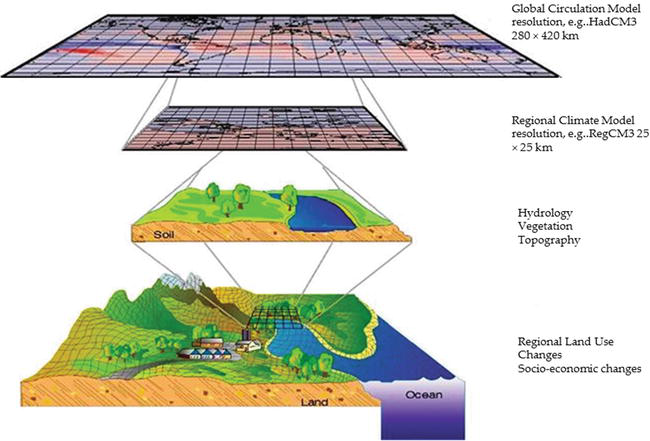
The UK’s Hadley Centre for Climate Prediction, part of the Met Office, is a global leader in using Monte Carlo methods. Its climate models, such as those used to produce the UK Climate Projections (UKCP), run vast ensembles of simulations. Each run uses slightly different initial conditions or model parameters to sample the uncertainty in the climate system. This generates a probabilistic projection—not a single future, but a range of possible futures with associated likelihoods, crucial for risk-aware policy planning.
Simulating Millions of Poker Hands
In gambling mathematics, Monte Carlo simulations are used identically. To determine the precise odds of a complex poker hand or the optimal strategy in a multi-deck blackjack game, analysts write programs to simulate millions of hands. Each simulated hand is a random sample, just like a single run of a climate model. The aggregated results provide robust statistical insights into:
- The exact probability of winning with a given starting hand.
- The expected value (long-term average return) of a particular bet.
- The volatility and risk associated with different game strategies.
This process mirrors the Hadley Centre’s ensemble approach, trading climate futures for game outcomes.
Regression Analysis: Finding Hidden Signals
Regression analysis is the statistical workhorse for identifying relationships between variables. It helps isolate the influence of a specific factor from a background of noise, answering questions like “how much did CO2 emissions contribute to this heatwave?” or “how much does skill affect a poker player’s long-term earnings?”
Attributing Extreme Weather Events
Climate scientists use advanced regression techniques in extreme event attribution studies. By analysing long-term UK climate datasets, they can model how the likelihood and severity of events—like the 2022 UK heatwave—have changed in a world with and without human-induced greenhouse gas increases. This involves teasing out the climate change ‘signal’ from the natural variability ‘noise’, a direct application of regression modelling to establish causal links.
Analysing Player Performance in Casinos
Similarly, casino analysts or professional poker players might use regression to understand performance. A model could analyse a player’s historical data to determine which factors most strongly predict profit:
- Skill metric (e.g., aggression frequency, hand selection).
- Game type (e.g., tournament vs. cash game).
- Psychological state or fatigue level.
This separates the influence of skill (the signal) from the inherent randomness of card distribution (the noise), much like separating human influence from natural climate cycles.
Time Series Analysis: Reading the Data’s Rhythm
Both climate and gambling data often come in sequences ordered through time. Time series analysis is the discipline dedicated to extracting trends, cycles, and patterns from such sequential data, while carefully guarding against misinterpretation.
Tracking Long-Term Climate Trends
Canadian climate research into Arctic sea ice decline is a classic time series problem. Scientists analyse decades of satellite data to identify a clear downward trend in summer ice extent. A key concept here is autocorrelation—where data points close in time are correlated (e.g., low ice one year makes low ice the next year more likely). Properly modelling this autocorrelation is essential for accurate trend detection and forecasting in datasets like the UK Climate Projections (UKCP).
The Gambler’s Fallacy and Serial Correlation
In casino games, understanding time series properties debunks dangerous myths. The gambler’s fallacy—the belief that a roulette wheel is “due” for a red after a string of blacks—mistakenly assumes negative autocorrelation in independent events. For a fair wheel, outcomes are independent; past spins do not influence future ones (zero autocorrelation). However, analysing a player’s results over time *can* reveal meaningful patterns, such as performance drift due to fatigue, which is a form of serial correlation. The statistical tool is the same; its correct application prevents costly errors in both fields.
The mathematical models—Markov chains, Monte Carlo simulations, regression, and time series analysis—are neutral, powerful tools. Their ethics and purpose are defined solely by their application. The same technique that helps the Hadley Centre safeguard our collective future may also refine a casino’s house edge. This duality underscores a profound truth: in a world of uncertainty, statistical literacy is not just for scientists; it is a fundamental lens for understanding risk, probability, and the very structure of the choices we make.




Post Comment
You must be logged in to post a comment.